

The Elements of Effective Website Design?
Simplicity
The first and most important element of effective website design is simplicity. A simple website design allows users to easily navigate through the site and find the information they are looking for. The design should be clean, uncluttered, and easy to understand. This means using a simple color scheme, readable fonts, and clear, concise messaging.
When designing your website, it’s important to consider the user experience. Think about what your visitors want to achieve when they visit your site and design it in a way that makes it easy for them to accomplish their goals. Keep in mind that simplicity does not mean boring or plain. You can still incorporate design elements that make your website visually appealing without sacrificing usability.
Navigation
Navigation is another crucial element of effective website design. Users should be able to easily navigate through the site and find the information they are looking for. The navigation menu should be easy to understand and clearly labeled. It’s important to keep the navigation menu consistent throughout the site so that users can easily find their way back to the homepage or other important pages.
It’s also important to consider the user’s journey when designing the navigation menu. Think about the pages that visitors are most likely to visit and make sure they are easy to find. This might include pages like About Us, Contact Us, and Services.
Mobile Optimization
With the increasing use of mobile devices, it’s important to ensure that your website is optimized for mobile. This means designing your website to be responsive, which means it adapts to the screen size of the device being used to view it. A mobile-optimized website is essential for providing a seamless user experience and for ensuring that your website is accessible to all users.
Branding
Branding is an important element of effective website design. Your website should reflect your brand’s identity and values, from the color scheme and typography to the language and tone used in your content. Consistent branding across your website and other digital platforms can improve brand recognition and help you build trust with your audience.
Navigation
Navigation is a key element of user experience and effective website design. Your website should be easy to navigate, with a clear hierarchy of pages and a menu that is easy to access and use. Consider using breadcrumbs, dropdown menus, and other navigation aids to help users find what they are looking for quickly and easily.

The Role of UI/ UX Design in Website in Web Development?
What is UI/UX Design?
UI design refers to the visual and interactive elements of a website or application, while UX design focuses on how the user interacts with those elements. UI design is responsible for the website’s layout, colors, typography, and other visual elements that contribute to the website’s look and feel. UX design, on the other hand, focuses on creating a seamless and intuitive user experience. It includes designing the user flow, information architecture, and usability of the website.
Role of UI/UX Design in Website Development
UI/UX design plays a critical role in website development. It ensures that the website is visually appealing, easy to navigate, and provides a seamless user experience. Below are some of the key roles that UI/UX design plays in website development:
Attracting and Retaining Users
The first and foremost role of UI/UX design in website development is to attract and retain users. The visual elements of a website, such as colors, typography, and layout, can create a strong first impression on the user. A well-designed website can capture the user’s attention and encourage them to explore the website further. On the other hand, a poorly designed website can turn users away and lead to high bounce rates.
Once a user is on the website, the UX design plays a crucial role in retaining them. A website with a seamless user experience can keep the user engaged and encourage them to explore further. In contrast, a website with a poor user experience can frustrate the user and lead to high bounce rates.
Improving Conversion Rates
Another critical role of UI/UX design in website development is to improve conversion rates. A conversion is when a user completes a desired action on the website, such as filling out a form or making a purchase. A well-designed website can encourage users to complete these actions, resulting in higher conversion rates.
UI design can contribute to higher conversion rates by creating a clear and easy-to-use interface. For example, a prominent call-to-action button can encourage users to complete a desired action. UX design, on the other hand, can improve conversion rates by creating a seamless user flow that guides the user towards the desired action. By focusing on UI/UX design, website developers can create a website that is optimized for conversion.
Optimizing for Different Devices
With the increasing use of mobile devices, website developers must design websites that are optimized for different devices. UI/UX design plays a crucial role in creating a responsive website that adapts to different screen sizes and devices.

The Pros and Cons of Custom vs. Template Website Design?
Custom Website Design
A custom website design is a unique design that is built from scratch to meet your specific needs. This type of design is typically more expensive than a template design, but it can provide a lot of benefits that a template design cannot.
- Pros of Custom Website Design
Unique Design: The biggest advantage of a custom website design is that it will be completely unique to your business. You can work with a designer to create a design that reflects your brand’s personality and values, which can help you stand out from the competition.
Better User Experience: With a custom design, you have more control over the user experience. You can create a design that is tailored to your target audience and is easy to use and navigate, which can improve your website’s engagement and conversion rates.
- Cons of Custom Website Design
Higher Cost: The biggest disadvantage of a custom website design is the higher cost. This type of design requires more time and expertise, which can drive up the cost significantly.
Longer Development Time: A custom design also takes longer to develop than a template design. The design process can take several weeks or even months, depending on the complexity of the design.
- Pros of Template Website Design
Lower Cost: The biggest advantage of a template website design is the lower cost. You can purchase a pre-designed website for a fraction of the cost of a custom design.
Faster Development Time: A template design can be set up much more quickly than a custom design. You can have a website up and running in a matter of days, rather than weeks or months.
- Cons of Template Website Design
Limited Customization: The biggest disadvantage of a template website design is the limited customization options. While you can customize the design to some extent, you may be limited by the template’s overall structure and layout.
Less Unique: Because template designs are pre-designed, your website may not be as unique as it could be with a custom design. You may also find that other businesses have chosen the same template, which can make your website look less distinctive.
In conclusion, both custom and template website designs have their pros and cons. Custom designs are more expensive but provide a unique design, better user experience, and more flexibility. Template designs are more affordable and can be set up more quickly, but may not be as unique and have limitations in terms of customization and functionality.
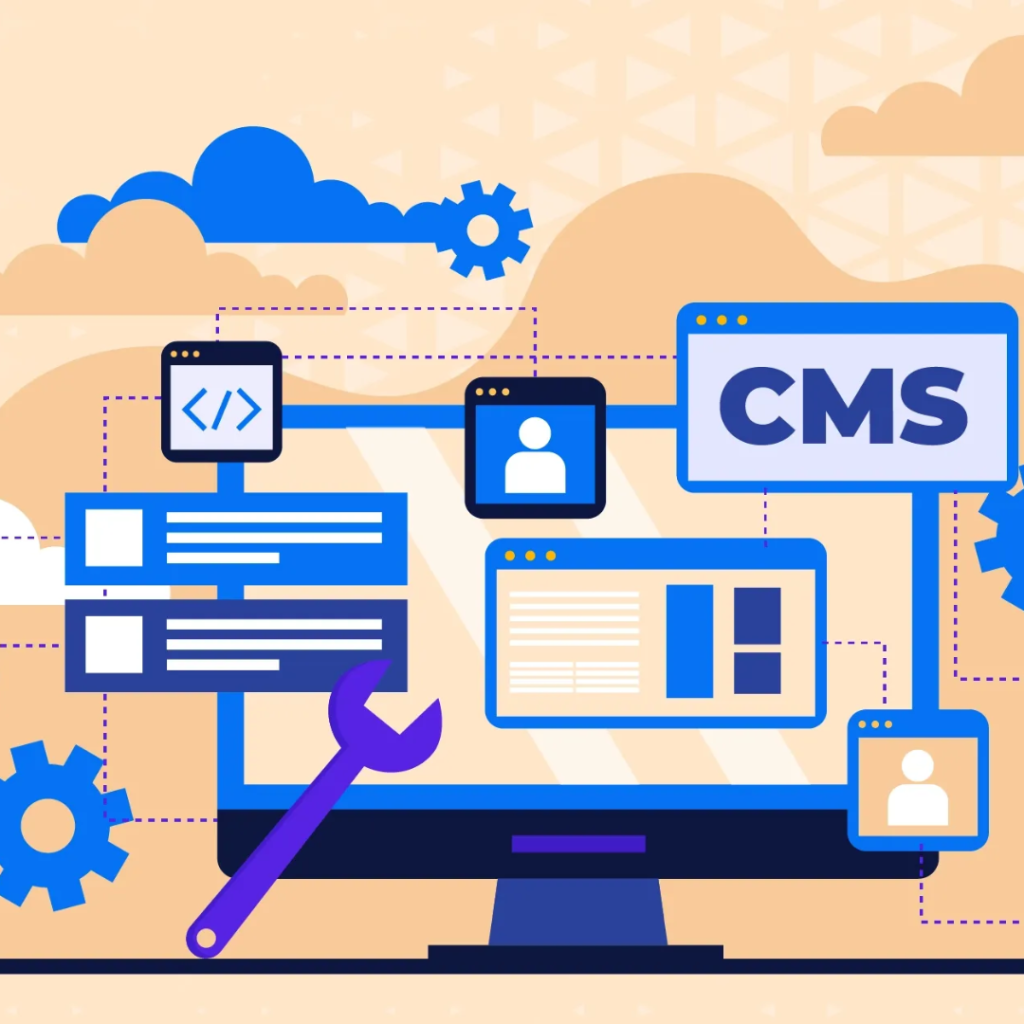
The Advantages of Having a CMS for Your Website?
- What is a CMS?
A Content Management System (CMS) is software that helps users create, manage, and publish digital content, typically on a website. A CMS simplifies the process of updating website content by allowing users to add or edit content without having to understand complex coding languages such as HTML or CSS. With a CMS, users can manage their website content from a single location without the need for technical expertise.
- Advantages of Having a CMS for Your Website:
Easy to Use
One of the biggest advantages of using a CMS is that it is easy to use. Most CMS platforms have a user-friendly interface that allows users to add, edit, and delete content with ease. This means that anyone, regardless of their technical expertise, can manage their website content without needing to hire a developer or a technical expert.
Cost-Effective
Using a CMS can be cost-effective for businesses of all sizes. CMS platforms such as WordPress, Drupal, and Joomla are open-source, which means that they are free to use. Additionally, many CMS platforms offer a wide range of plugins and extensions that can be used to enhance website functionality without the need for custom development, which can be expensive.
Customizable
A CMS platform allows users to customize the look and feel of their website. Many CMS platforms offer a wide range of templates and themes that can be used to create a unique website design. Users can also customize the design and functionality of their website by installing plugins and extensions.
SEO Friendly
Search Engine Optimization SEO is the process of optimizing your website to rank higher in search engine results pages. A CMS can help improve the SEO of your website by providing tools to optimize content for search engines. For example, many CMS platforms offer plugins that allow users to add meta descriptions, keywords, and other SEO elements to their website content.
Collaborative
A CMS allows multiple users to collaborate on website content. This is particularly useful for businesses that have multiple employees who need to manage website content. With a CMS, users can assign roles and permissions to different users, which allows them to work on specific tasks without interfering with each other’s work.
In conclusion, a CMS offers many advantages for website owners, including easy content management, cost-effectiveness, customization, SEO-friendliness, collaboration, mobile responsiveness, scalability, security, analytics, content management, integration, and accessibility. By using a CMS, businesses can streamline their workflows, improve efficiency, and provide a better user experience for their website visitors. With the many benefits that a CMS platform offers, it’s no wonder that they have become a popular choice for businesses of all sizes.

The Benefits of Having a Mobile App for Your Website?
Better User Experience
Mobile apps offer a better user experience than mobile websites. They are specifically designed for mobile devices, and hence they provide a more user-friendly interface that is easy to navigate. Mobile apps can be customized to suit the needs of your customers, and you can offer personalized content and features to make their experience more engaging.
Mobile apps also load faster than mobile websites, as they are built to function seamlessly on mobile devices. This means that users can access your content and services quickly, without having to wait for the website to load. A better user experience leads to higher engagement rates and improved customer satisfaction, which in turn leads to increased sales and revenue.
Increased Brand Visibility
Having a mobile app for your website can increase your brand visibility and help you stand out from your competitors. A mobile app provides a direct channel of communication between your business and your customers, and it can be used to promote your brand and showcase your products and services.
Mobile apps also offer push notifications, which allow you to send targeted messages to your customers. This can be used to promote new products, offer discounts, or announce upcoming events. Push notifications are a powerful tool for increasing engagement and keeping your customers informed about your brand.
Improved Customer Engagement
Mobile apps can significantly improve customer engagement rates, as they provide a more immersive and interactive experience than mobile website. With mobile apps, you can offer features like gamification, loyalty programs, and social sharing, which can keep your customers engaged and coming back for more.
Mobile apps also offer the ability to collect user data, which can be used to personalize content and offers for your customers. This can increase the likelihood of them making a purchase or engaging with your brand in other ways.
Competitive Advantage
Mobile apps can provide a competitive advantage for your business by offering a personalized and convenient experience for your customers. With the increasing use of mobile devices and smartphones, mobile apps are becoming an essential part of the digital landscape, and businesses that invest in mobile apps can gain a competitive advantage in their industry.
Increased Sales and Revenue
Mobile apps can help increase sales and revenue for your business by providing a convenient and accessible platform for your customers to make purchases. With features like mobile payments, in-app purchases, and one-click ordering, you can make it easier for customers to make purchases and increase sales and revenue for your business.
Improved SEO
Mobile apps can help improve your website’s (SEO) by providing a high-quality user experience and reducing bounce rates. With a mobile app, customers are more likely to stay on your website and engage with your content, which can improve your website’s ranking on search engine results pages (SERPs).
In conclusion, having a mobile app for your website can provide numerous benefits for your business, from improving customer service and brand loyalty to increasing sales and revenue and gaining a competitive advantage in your industry. By providing a personalized and convenient experience for your customers, mobile apps can help you build a loyal customer base and increase brand visibility and trust. With the ability to collect user data and analytics, mobile apps can also provide valuable insights into your customer’s preferences and purchase patterns, which can help you optimize your products and services and develop targeted marketing strategies for better performance and sales.

The Role of Branding in B2B Marketing: A Comprehensive Analysis
Introduction
Background
Branding has long been recognized as a critical component of marketing strategies in consumer markets. However, its significance in business-to-business (B2B) marketing is equally important and often overlooked. In the B2B context, where transactions involve organizations rather than individual consumers, effective branding plays a pivotal role in building trust, influencing decision-making, and fostering long-term relationships. This research paper aims to explore the multifaceted role of branding in B2B marketing and shed light on its impact on various aspects of business success.
Research Objective
The objective of this research is to comprehensively analyze the role of branding in B2B marketing. By examining the theoretical frameworks, empirical evidence, and practical examples, this paper aims to provide insights into how branding influences customer decision-making, relationship building, and overall business outcomes in the B2B environment.
Research Questions
What is the definition of branding in the B2B context, and how does it differ from consumer branding?
How does branding impact customer decision-making in B2B markets?
What strategies can businesses employ to build and manage strong B2B brands?
What is the role of branding in B2B relationship building?
What is the financial impact of branding on B2B firms?
Methodology
To achieve the research objectives, this study will employ a mixed-methods approach. It will involve an extensive review of existing literature on branding in B2B marketing, including academic journals, industry reports, and relevant books. Empirical evidence from case studies and surveys will also be examined to provide practical insights. The research will aim to analyze and synthesize the information gathered to present a comprehensive understanding of the role of branding in B2B marketing.
Overview of B2B Marketing
B2B marketing refers to the process of selling goods, services, or solutions from one business to another. It involves transactions between organizations rather than targeting individual consumers. B2B marketing often requires building long-term relationships, navigating complex decision-making structures, and addressing specific business needs and goals.
B2B Buying Process
The B2B buying process typically involves multiple decision-makers, extensive research, and a focus on value and return on investment. Understanding the various stages of the buying process, such as problem recognition, information search, evaluation of alternatives, and final decision-making, is crucial for effective B2B branding strategies.
Importance of Relationship Building in B2B Marketing
Relationships are at the core of B2B marketing. Establishing and nurturing strong relationships with customers can lead to repeat business, loyalty, and positive word-of-mouth. Successful B2B branding strategies should aim to build trust, credibility, and a sense of partnership with customers.